Deep sleep gets shorter
Slow-wave sleep tends to shrink with age. Sleep researchers have long connected that stage to how the brain files the day away overnight, which is why a poor week of sleep and a forgetful week often arrive together.
Two ordinary pantry items, one household habit older than the alphabet, and the reason researchers keep circling back to it when they talk about memory after 50.
Free presentation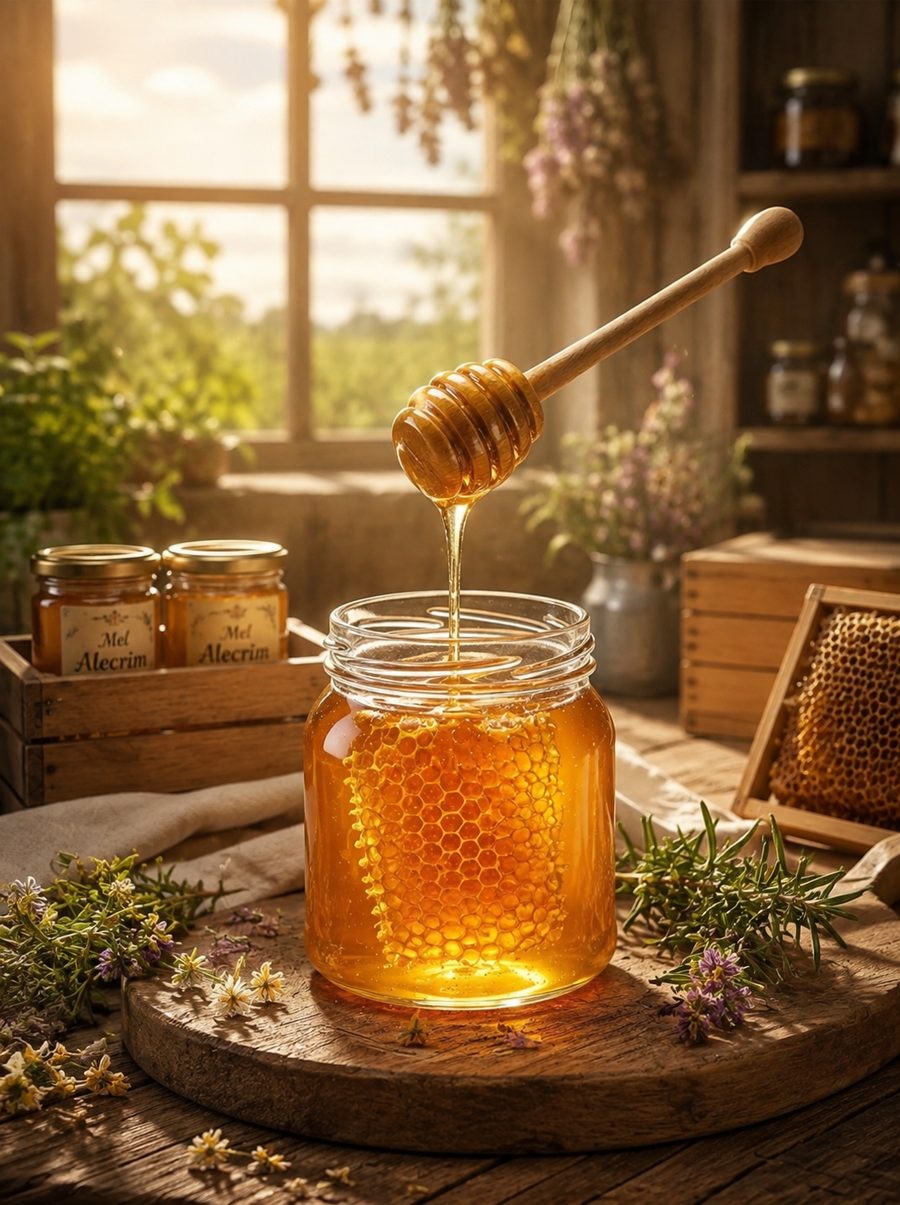 Watch: the spoon-and-sprig morning, explained in fullWatch the free presentation
No email required · Plays in your browser
First, the honest part
Nothing here is a diagnosis. These are the four changes researchers most often describe when they study ordinary, age-related memory - the kind that annoys you rather than alarms your doctor.
Slow-wave sleep tends to shrink with age. Sleep researchers have long connected that stage to how the brain files the day away overnight, which is why a poor week of sleep and a forgetful week often arrive together.
The name is usually still there. What changes is how quickly you can walk back to it. Cognitive aging studies describe this as a speed problem far more often than a loss problem.
You cannot recall what you never fully took in. Divided attention - the phone, the television, the half-finished thought - leaves a thin memory trace, and thin traces are hard to find later.
Identical days blur. Without novelty, there are fewer distinct markers for the mind to hang a memory on, which is one reason a repetitive month can feel like it vanished.
Clearing the air
Popular advice about memory is loud. Here is where it tends to drift from what the research actually supports.
"Serious memory loss is just part of getting older. Nothing to be done."
Researchers draw a line between ordinary age-related forgetfulness and changes that warrant a medical evaluation. The two are not the same thing, and only a licensed professional can tell you which one you are looking at. Assuming the first can delay a conversation worth having.
"A daily crossword keeps the whole brain sharp."
Studies on cognitive training repeatedly find that people get better at the trained task, and that the improvement transfers to everyday life far less reliably than the marketing implies. Puzzles are pleasant. They are not a complete plan.
"If it grows in a garden, it cannot interfere with anything."
Plant compounds and concentrated extracts can interact with prescription medication. Honey is also a sugar, which matters if you monitor blood glucose. Before adding anything to a daily routine, the boring step is the right one: ask your doctor or pharmacist.
The ritual itself
What follows is a description of a traditional household routine, not a treatment protocol and not medical instruction.
A small spoon of raw, unfiltered honey, taken at the same moment every morning - traditionally before the first meal, while the kettle is still heating. In the households where this survived, the amount was never the point. The fixed hour was.
A single sprig, steeped in hot water or simply crushed between the fingers so the oil lifts into the air. Rosemary and honey have shared a table around the Mediterranean for centuries, and the aromatic half of the pairing was always considered part of the ritual, not a garnish.
The ritual was never a spoon alone. It was attached to the first movement of the day - the walk to the garden, the market, the bakery. Behaviour researchers call this habit stacking: a new routine that is tied to an existing one is the one still standing in week three.
Where it comes from
Students in ancient Greece are said to have worn rosemary in their hair while they studied, and the plant carried that association for so long that Shakespeare handed Ophelia a sprig for remembrance. Honey travelled the same route: a pantry staple, a preservative, an offering, and a household remedy recorded on tablets long before anyone wrote down a clinical trial.
What is old is the tradition. What is new is the curiosity. Over the last two decades, food scientists have catalogued the polyphenols in raw, unprocessed honey, and separate groups have studied rosemary's aromatic compounds - including small, much-discussed experiments on scent and cognitive performance. The findings are early, the sample sizes are modest, and the honest summary is that researchers find the questions interesting, not settled.
That gap between an old habit and a young body of evidence is exactly where most health marketing goes wrong. It fills the gap with promises. The presentation on this page does something less dramatic: it walks through the tradition, shows what the ritual actually looks like in a real kitchen, and leaves the conclusions to you and your doctor.
Worth saying plainly
No food, spice or spoonful of anything treats a memory condition. Honey is still sugar, which matters if you monitor blood glucose, and concentrated plant extracts can interact with prescription medication. A tradition being old is not evidence that it works - it is only a reason someone bothered to study it.
Before your next appointment
This is not a screening tool and it cannot tell you anything about your health. It is a note-taking prompt, so that a real conversation with a real clinician starts with real detail.
Asking something again inside one conversation, and being surprised when you are told you already asked.
Not the occasional stumble, but a pattern of arriving halfway through a thought with no idea where it was going.
A route you have driven for years, or a recipe you have made a hundred times, suddenly needing full concentration.
Everyone reaches for a word. Worth noting when the reaching becomes frequent enough that other people finish your sentences.
The calendar alert arrives, is acknowledged, and the appointment is still missed. The system is in place and it is not catching things.
Often the most useful signal on this list, and the easiest one to dismiss. Write down what they said and when.
If any of this is happening, the next step is a licensed healthcare professional - not a video, and not a product. Bring the notes with you.
Reader reactions
I have started and abandoned about six healthy habits this year. The part that stuck with me here was tying it to the morning walk instead of trying to remember it on its own.
Illustrative example · not an actual customer statement
My grandmother kept rosemary by the door in Greece and I never once asked why. Watching this mostly made me want to call my mother and ask what else she remembers.
Illustrative example · not an actual customer statement
What I appreciated was that it did not promise me anything. I take medication for blood pressure, so I checked with my pharmacist before changing my breakfast at all.
Illustrative example · not an actual customer statement
Questions
A walkthrough of the traditional morning ritual described on this page: where it comes from, what the two ingredients are, how the routine is assembled, and what the current research does and does not say. It is presented as information for adults over 50 who are curious about the tradition.
No. Nothing on this page or in the presentation is intended to diagnose, treat, cure or prevent any disease or condition. This content has not been evaluated by the Food and Drug Administration. If you are worried about your memory, the correct next step is an appointment with a licensed healthcare professional.
No. The presentation is free to watch and does not require an email address. It does contain an offer at the end, and this page earns a commission if you choose to purchase - which is disclosed at the top, here, and in the footer.
We cannot answer that, and anyone who does answer it without knowing your medical history is guessing. Honey is a sugar and concentrated plant extracts can interact with medication. Ask your doctor or pharmacist first - they have your chart and we do not.
The kitchen portion is a few minutes. The walk that traditionally goes with it is the longer part, roughly twenty minutes. The tradition treats consistency as the whole point, which is why the presentation spends more time on the hour than on the quantity.
We make no promise that it will do anything for you. Individual experiences vary, illustrative comments are not evidence, and a traditional household habit with early research behind it is not a guarantee of any result.
This is sponsored content produced by an independent marketing publisher, not by a medical organisation, a hospital or a government body. We are compensated through affiliate links when readers purchase through the presentation. You can reach the publishing team through the contact link in the footer.
The full story
The presentation lays out the tradition, the ingredients and the research in plain language - including the parts that are still uncertain. Watch it, take what is useful, and bring anything you are unsure about to your doctor.
Watch the free presentationFree to watch · No email required · Sponsored content with affiliate links
Last updated: August 2026
This policy explains what information this website collects, how it is used, and the choices available to you. By using this website you agree to the practices described below.
This website and its advertising partners may use cookies, pixels, local storage and similar technologies to remember your visit, measure campaign performance and limit how often an advertisement is shown. Most browsers allow you to refuse or delete cookies through their settings. Blocking cookies may affect how parts of this website function.
We use third-party service providers for hosting, analytics, advertising measurement and email. These providers process data on our behalf and may set their own cookies subject to their own privacy policies. When you follow a link from this website to an advertiser or merchant, that destination operates independently and its own privacy policy governs any information you provide there.
We retain information only for as long as it is needed for the purposes described in this policy, or for as long as required by applicable law, after which it is deleted or anonymised.
Depending on where you live, you may have the right to request access to the personal information we hold about you, request correction or deletion, object to or restrict certain processing, request a portable copy, and opt out of the sale or sharing of personal information. You may also withdraw consent at any time where processing is based on consent. To exercise any of these rights, use the contact address provided on this website. We do not discriminate against anyone for exercising these rights.
This website is intended for adults and is not directed to children under 16. We do not knowingly collect personal information from children. If you believe a child has provided information, contact us and it will be deleted.
We use reasonable administrative and technical measures to protect information. No method of transmission or storage over the internet is completely secure, and we cannot guarantee absolute security.
This policy may be updated from time to time. The revised version takes effect when it is posted on this page, and the date at the top will be updated to reflect the change.
Questions about this policy can be sent to the support address listed in the Contact section of this website.
Last updated: August 2026
By accessing or using this website you agree to these terms. If you do not agree, please discontinue use of the site.
This website is provided for personal, non-commercial informational use by adults. You agree not to misuse the site, attempt to gain unauthorised access to it, interfere with its normal operation, scrape or copy its content at scale, or use it for any unlawful purpose.
All content is general information and is not medical, legal, financial or professional advice, and no professional relationship is created by your use of this site. Content may be updated or removed at any time without notice, and we do not warrant that it is complete, current or error-free. Always consult a qualified professional before acting on anything you read here.
Text, layout, graphics and other material on this website are protected by intellectual property laws and remain the property of their respective owners. You may not reproduce, republish, distribute or create derivative works from this material without prior written permission. Third-party names and marks that appear are the property of their respective owners and their use does not imply endorsement.
This website participates in affiliate programmes and is compensated for referred purchases. Links on this page may be tracked. We are not the seller of any product referenced here and we do not process payments, handle orders or provide product support. Any purchase is a transaction between you and the merchant, governed by that merchant's own terms, refund policy and privacy policy.
Links to external websites are provided for convenience. We do not control and are not responsible for the content, products, claims or practices of any third-party site.
Any comments, examples or scenarios shown are illustrative unless expressly identified as statements from actual customers. They do not represent typical results and are not a guarantee of any outcome.
This website is provided on an "as is" and "as available" basis without warranties of any kind, whether express or implied, including any implied warranties of merchantability, fitness for a particular purpose and non-infringement.
To the maximum extent permitted by law, the operators of this website are not liable for any indirect, incidental, special, consequential or punitive damages, or any loss of profits or data, arising from your use of or inability to use this website or anything obtained through it.
You agree to indemnify and hold harmless the operators of this website from any claim or demand arising out of your use of the site or your violation of these terms.
These terms may be revised at any time. Continued use of the website after changes are posted constitutes acceptance of the revised terms.
For questions about the content published on this website, editorial corrections, advertising disclosures or privacy requests, write to support@yourdomain.com. Messages are reviewed on business days and typically answered within two business days.
We are a publisher, not the seller. We cannot look up an order, change a shipping address, issue a refund or answer product questions. Order support is handled by the merchant that processed your payment - the fastest route is the support address printed on your order confirmation email or receipt.
To request access to, correction of or deletion of personal information associated with your visit, use the same address above and include enough detail for us to locate the relevant records.
This website does not sell products and does not process payments. No purchase can be made on this page.
Any purchase made after following a link from this page is a transaction between you and the merchant operating the checkout. That merchant's refund policy applies in full, including its refund window, any return requirements and the method by which a refund is issued.
Write to us at the address in the Contact section and we will point you to the correct merchant support channel where we are able to identify it. We cannot authorise, process or guarantee a refund on a merchant's behalf.
No physical or digital product is sold or shipped from this website.
Orders placed after leaving this page are fulfilled by the merchant that processed the payment. Delivery times, shipping costs, carrier selection, tracking, international availability and customs or import charges are set by that merchant and disclosed at its checkout.
We are a publisher and have no access to order, fulfilment or carrier systems.
This page is sponsored content supported by advertising and contains affiliate links. We may be compensated when a reader clicks through and completes a purchase. Compensation may influence which products appear here, and nothing on this page should be read as an impartial editorial review.
Content on this website is general information for educational purposes and is not medical advice, diagnosis or treatment. These statements have not been evaluated by the Food and Drug Administration. No product or routine described here is intended to diagnose, treat, cure or prevent any disease. Never disregard professional medical advice or delay seeking it because of something you read here. Consult a qualified healthcare professional before making changes to your diet, supplements, exercise or medication - especially if you are pregnant or nursing, manage a medical condition, or take prescription drugs.
Individual results vary and no result is promised or guaranteed. Testimonials, comments and examples on this page are illustrative unless expressly identified as statements from actual customers, and do not represent typical results.
References to studies, traditions or historical practices are provided for context only and do not constitute an endorsement, a claim of efficacy or a representation that any cited research applies to any specific product. Links to third-party websites are outside our control and we accept no responsibility for their content or practices.